How to Prevent AI Hallucinations and Improve Prompt Accuracy
Use source grounding, explicit uncertainty rules, and structured reasoning to produce more accurate and dependable AI responses.
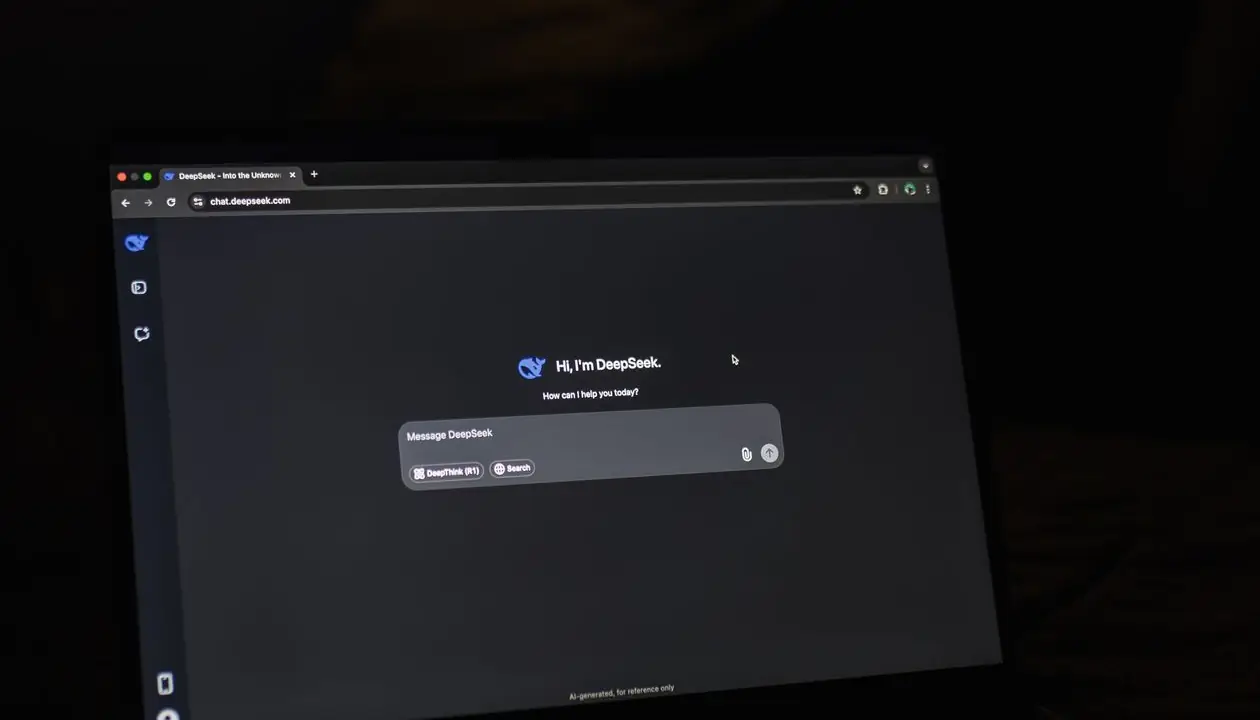
Large Language Models (LLMs) are powerful tools for research, coding, and writing. However, they sometimes exhibit “hallucinations”—generating confident, grammatically correct statements that are factually inaccurate or fabricated.
Whether you use AI for coding assistance or data analysis, a few deliberate prompt-engineering techniques can significantly reduce hallucinations and improve output accuracy.
What Causes AI Hallucinations?
Language models generate responses by predicting the most statistically probable next token based on their context. They do not automatically check live facts unless they are connected to an active search or retrieval tool.
- Ambiguous instructions: Broad prompts leave too much room for probabilistic guesses.
- Lack of context: Missing baseline information forces the model to fill gaps.
- Prompt traps: Leading questions can make the model accept a false premise.
Strategy 1: Provide Source Grounding
Instead of asking the model to answer entirely from memory, provide the source material and tell it to use only that context. This approach is often called retrieval-augmented generation, or RAG.
Example prompt structure
Task: Answer the question using only the source text below.
Rule: If the answer is not available in the text, say “Information not available in context.” Do not guess.
Source text: [Paste your documentation]
Question: [Insert your question]
Strategy 2: Request a Structured Analysis
For multi-step problems, ask the model to organize its work into explicit stages before giving the final result. This makes missing assumptions and logic errors easier to spot.
Poor prompt
Write a Python function to solve this logic puzzle and give me the output.
Improved prompt
Solve this systematically: analyze the constraints, draft pseudocode, identify edge cases, and then provide the final Python code with a short verification.
Strategy 3: Give the Model an “Unsure” Option
AI assistants often try to answer even when the available evidence is weak. Explicitly allowing uncertainty reduces plausible-sounding fabrication.
If you are uncertain about a fact, code syntax, or historical detail, state the uncertainty and explain what information is needed to verify it.
Best Practices at a Glance
| Technique | Action | Goal |
|---|---|---|
| Grounding | Supply reference documents directly | Reduce reliance on model memory |
| Structured analysis | Break complex work into verifiable stages | Catch logical jumps and calculation errors |
| Uncertainty rules | Allow “I don’t know” responses | Prevent forced answers when facts are missing |
| Negative constraints | State what must not be included | Keep the response accurate and on-topic |
No prompt can guarantee perfect accuracy. For important medical, legal, financial, or technical decisions, verify the final answer against primary and authoritative sources.
0 COMMENTS
Be the first person to share a thought.